Preview Figma
Year
2022
Client
Chitkara University
Project Overview
ATOM is Chitkara University’s centralized admissions and lead management platform designed to manage the complete journey from student enquiry to admission confirmation. I worked as the Product Designer across UX, information architecture, interaction design, and UI design to create a system that supports internal operational efficiency for admissions teams while delivering a clear, low-friction application experience for prospective students across web and mobile.

The Challenge
Before ATOM, admissions workflows relied on disconnected tools such as spreadsheets and multiple lead sources, resulting in poor visibility into lead status, delayed follow-ups, complex application forms, and weak coordination between counselling and admissions teams. This led to missed opportunities, low conversion rates, inconsistent applicant experiences, and high operational overhead during peak admission cycles.
Product Goals
For admissions teams, the goal was to centralize all leads, reduce manual work, track counselling progress clearly, and improve visibility into lead-to-admission conversion. For students, the goal was to simplify the application process, reduce confusion across long forms, support mobile-first behavior, and increase form completion rates through guided and transparent flows.
Product Architecture
ATOM was designed as two tightly connected systems sharing a common data layer: an internal admissions and lead management system used by managers and counsellors, and an external student application system optimized for prospective applicants. Each system was tailored to its users’ workflows while remaining synchronized to avoid data silos.
User Group 1: Admissions Managers & Counsellors
1. Manager Dashboard (Web & Mobile)
The manager dashboard provides a real-time overview of admissions activity, including total leads, lead status distribution, application progress, follow-up reminders, and quick actions. The UX intent was to reduce time-to-insight, enable faster decision-making, and allow managers to act immediately without navigating deep menus.
2. Lead Management
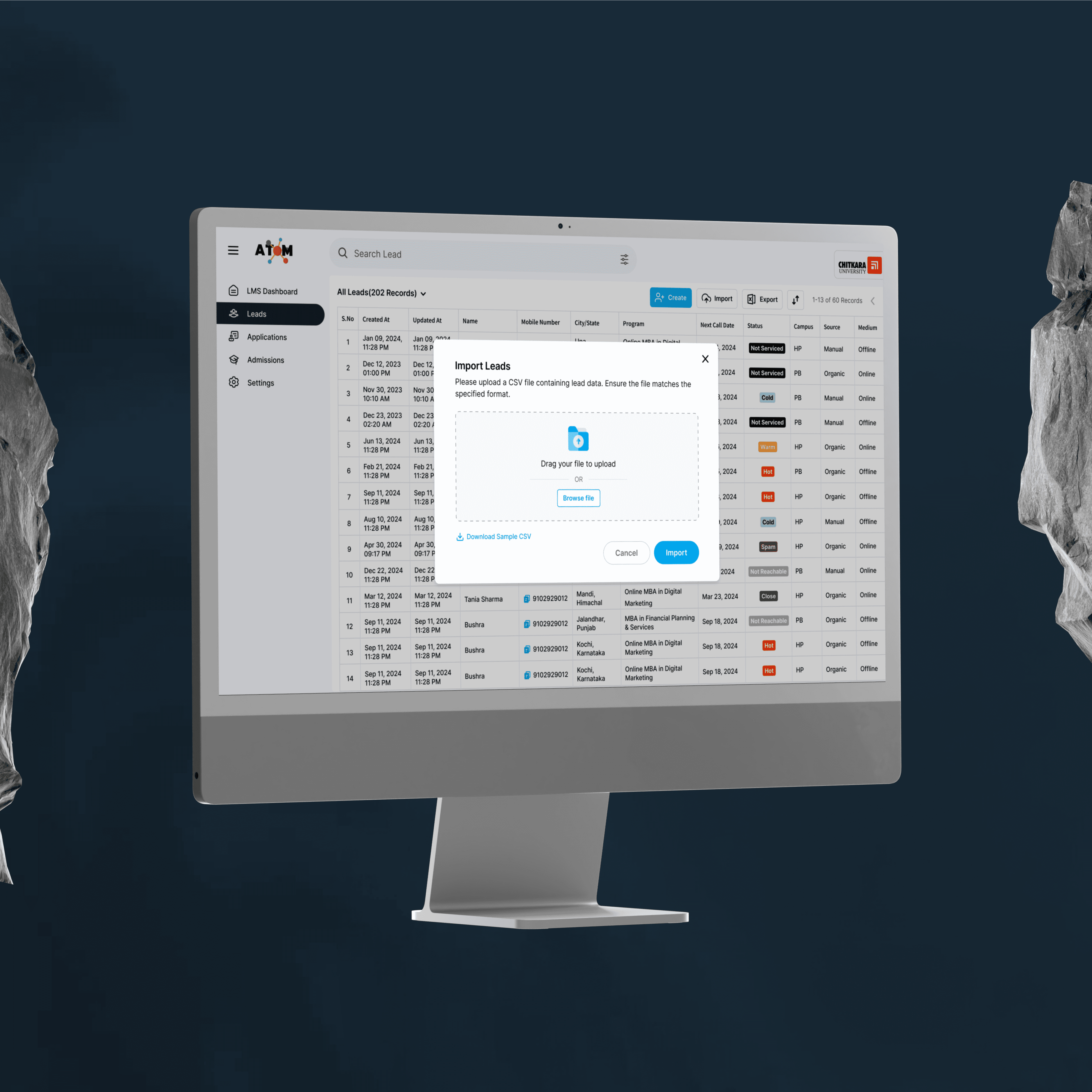
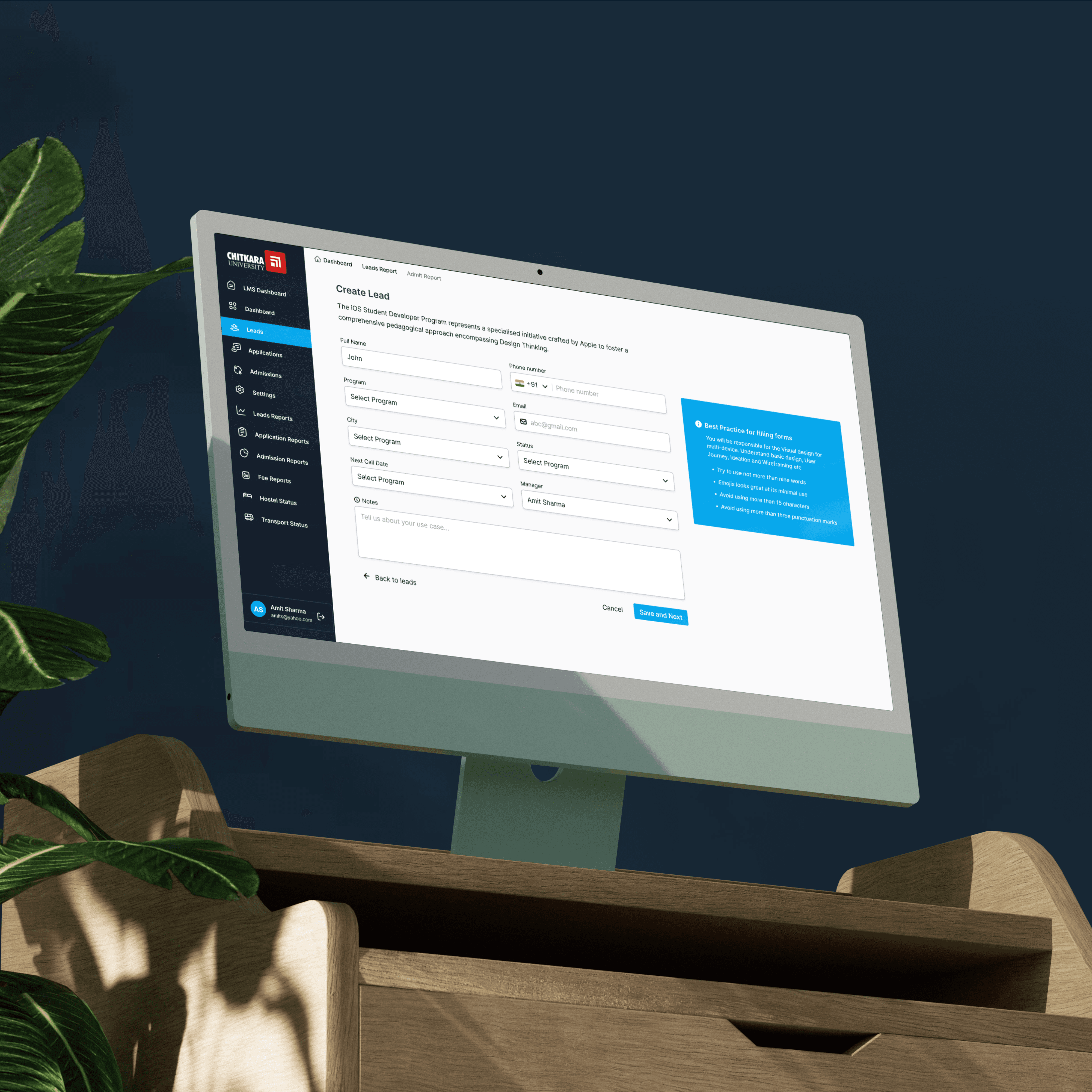
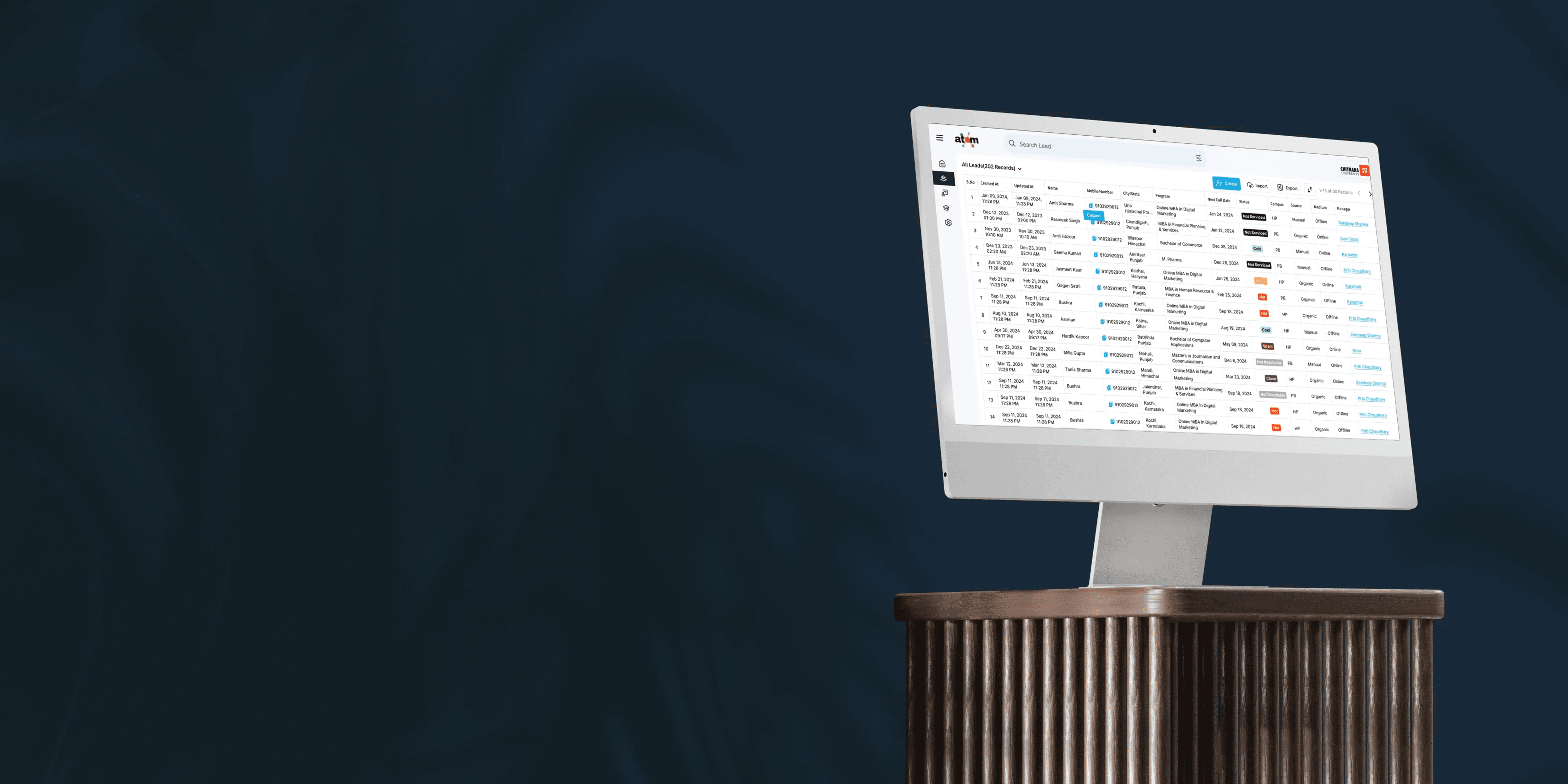
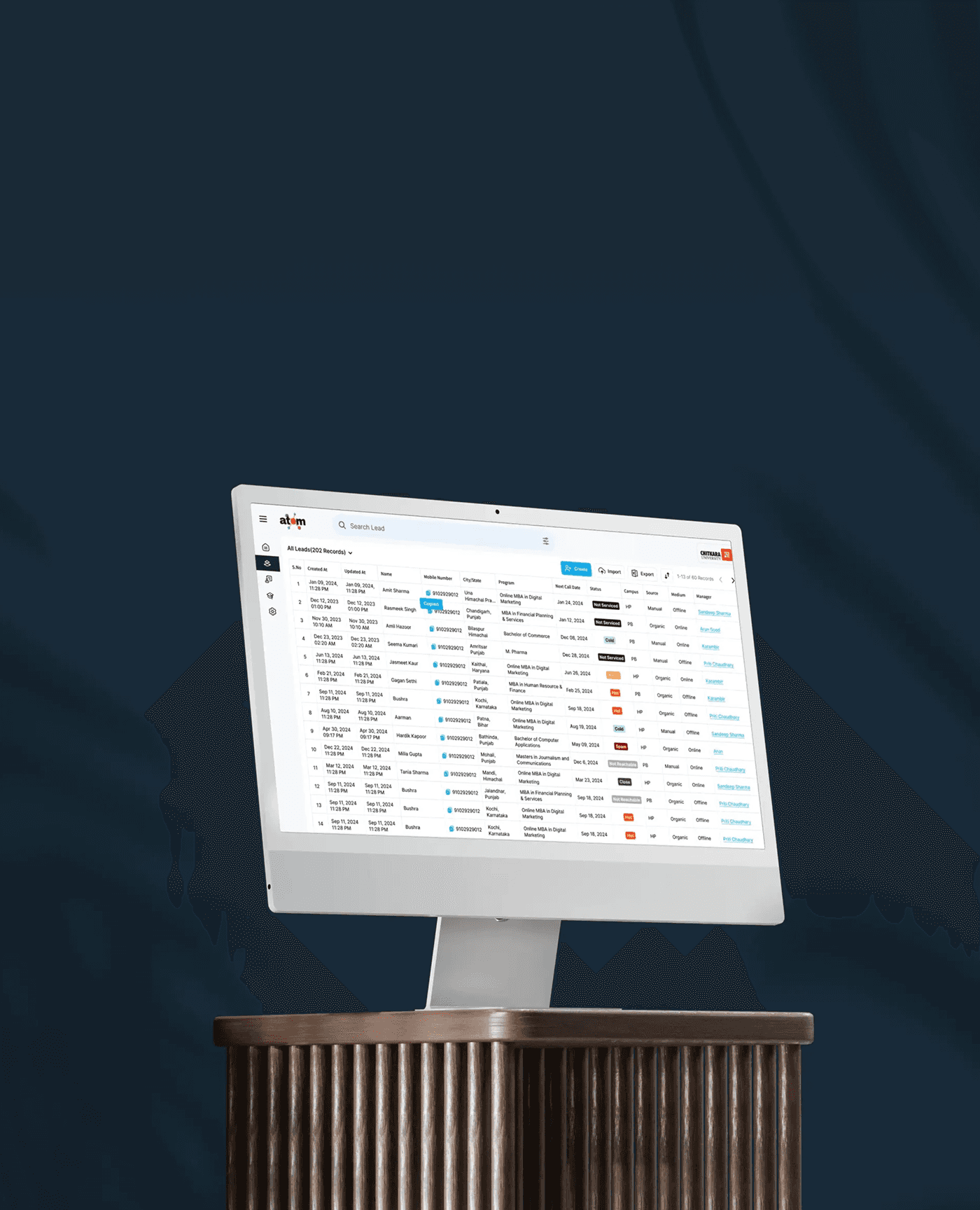
The lead management module presents all incoming leads in a structured, filterable list with search by name, phone, or email. Each lead has a detailed profile containing student information, program interest, interaction history, counsellor notes, and application status, ensuring a single source of truth and eliminating reliance on memory or external tools.
3. Lead Assignment & Follow-ups
Leads can be assigned to counsellors, tracked through follow-up attempts, and updated using predefined status values such as Interested, Applied, or Converted. A status-driven workflow was chosen over free-form notes to make tracking measurable, consistent, and easier to report on across teams.
4. Reporting & Insights (Manager View)
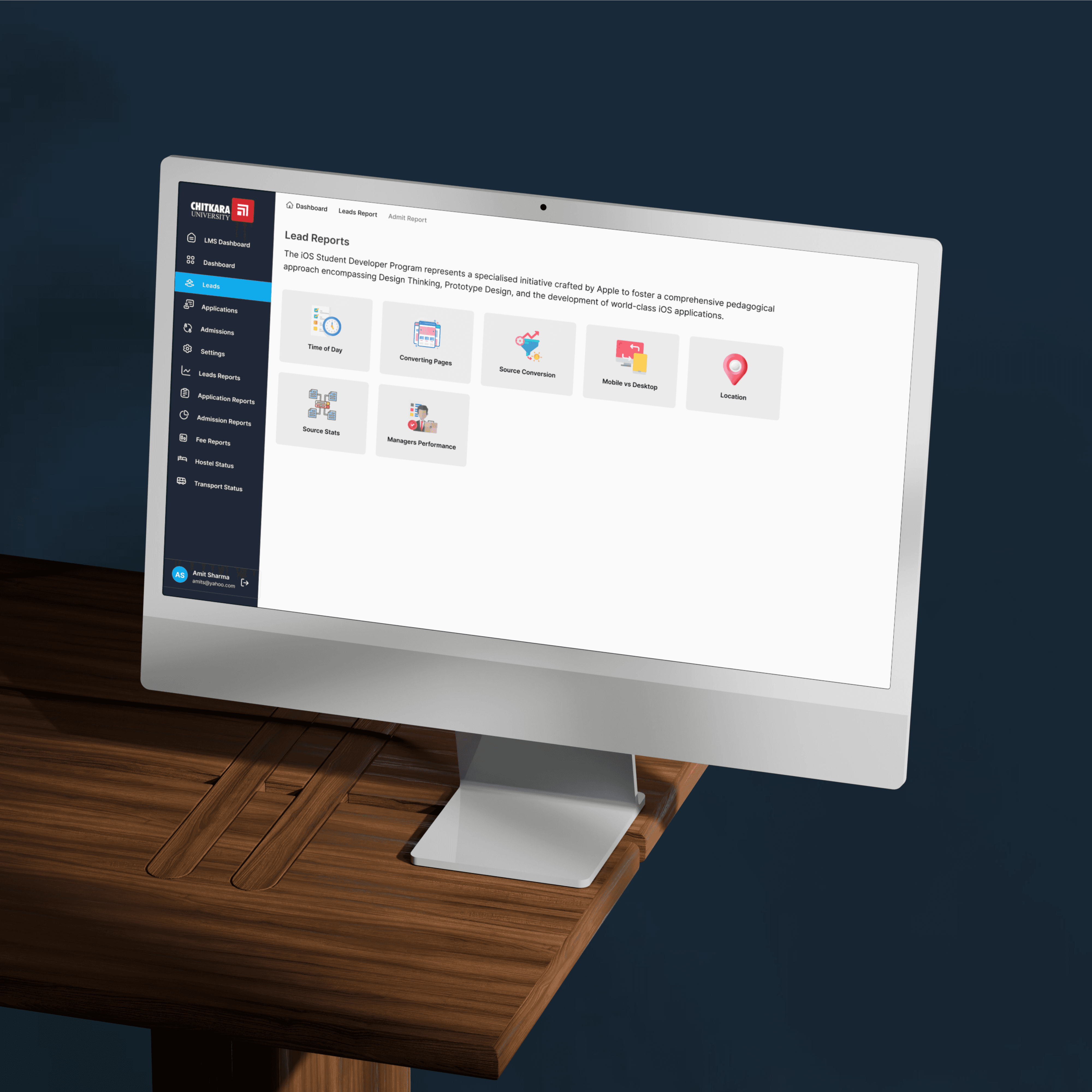
Managers have access to reporting views that surface lead source performance, counsellor effectiveness, conversion funnels, and drop-off points. The UX focus was to enable data-backed admissions decisions and help teams identify bottlenecks early in the admission cycle.
User Group 2: Student Application System
1. Application Entry Points
Students enter the application flow through multiple touchpoints including the university website, counsellor-shared links, and campaign landing pages. These entry points were designed to be consistent and frictionless, ensuring continuity regardless of how a student discovered the application.
2. Application Form Structure (Web & Mobile)
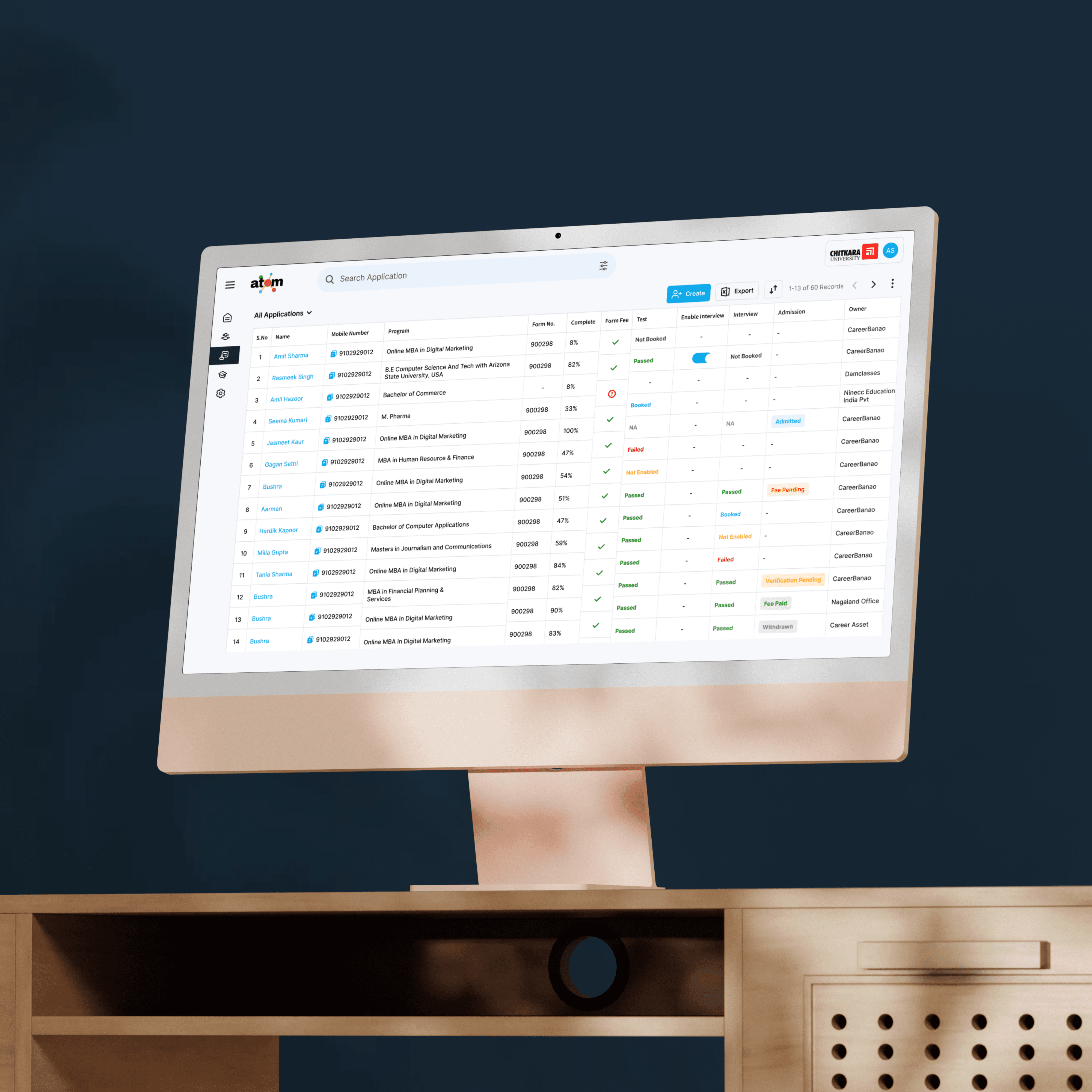
The student application form was designed as a step-by-step flow rather than a single long form, breaking the process into manageable sections such as personal details, academics, program selection, document upload, and review. UX decisions such as progress indicators, inline validation, and save-and-resume functionality significantly reduced cognitive load and abandonment.
3. Mobile-first Considerations
Given that a large portion of applicants apply via mobile devices, the application experience was optimized for thumb-friendly inputs, minimal typing, simplified document uploads, and clear error messaging. This ensured accessibility and ease of use even during long form submissions.
4. Application Status Tracking (Student View)
After submission, students can track their application status through clear states such as under review, documents pending, or offer issued. This transparency reduces anxiety, builds trust, and minimizes support queries to the admissions team.
Core User Flows
The admissions team flow follows a clear sequence of receiving leads, assigning them, conducting follow-ups, tracking progress, and converting applicants. The student flow moves from applying to completing the form, submitting, and tracking status, with both flows designed to support each other rather than operate in silos.
Challenges & Trade-offs
A key challenge was balancing power and simplicity, as managers required dense data views while students needed clarity and guidance. This was addressed through role-based interfaces and distinct interaction patterns. Reducing application drop-offs required progressive disclosure and mobile-first UX, while scaling for peak admission periods demanded performance-friendly layouts, reduced visual clutter, and clear system feedback.

Outcomes and Impact
ATOM improved lead visibility, reduced follow-up delays, lowered application abandonment rates, and strengthened coordination between admissions teams. The system proved scalable across programs and campuses, supporting high traffic during admission cycles without compromising usability.
Future Enhancements
Planned enhancements include automation-based lead scoring, WhatsApp and SMS follow-ups, richer applicant dashboards with document tracking, analytics-driven form optimization, and deeper integrations with ERP and CRM systems.